

Earlier this month, I had the privilege of presenting at the UXinsight Festival in the Netherlands, where I joined several hundred UX researchers from around the world for three days of rigorous, energizing conversation about the future of our field. My session, From Data Provider to Chief Insights Marketer, explored the gap between research quality and research impact.
The core argument: a methodologically sound study with poor communication is a zero-impact study. The inverse is also true. The most influential research isn’t simply the most rigorous; it’s the research that moves people to act.
Two models of research communication and why the difference matters
Research relationships often default to what communication theory describes as the linear or deficit model. The assumption embedded in this model is straightforward, and on its surface, reasonable: stakeholders lack knowledge; the researcher has it; the report transfers it. Research is produced, delivered, and the researcher’s job is done.
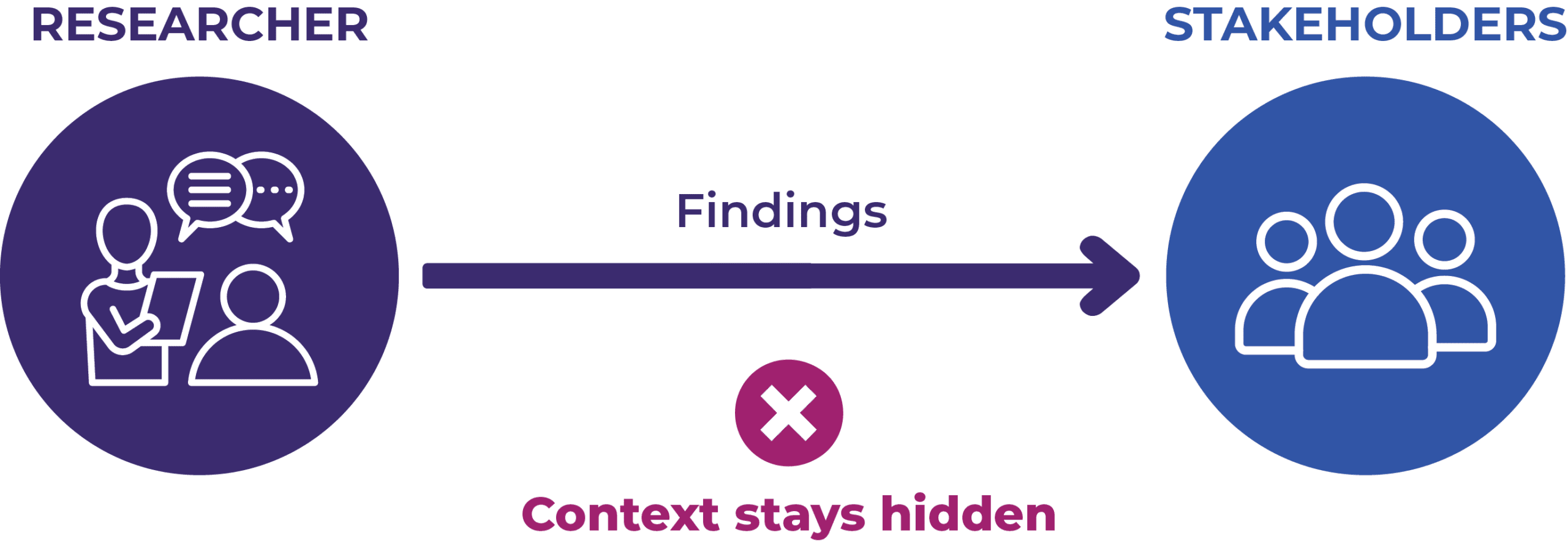
The problem is everything this model ignores:
- The stakeholder’s existing context
- The decisions already in motion that will shape how findings are received
- The organizational realities that determine what gets acted on
- The stakeholder’s capacity at any given moment to absorb and use new information
When researchers operate from this model, a frequent result is what can be called the “big reveal” report: a comprehensive, well-crafted deliverable that lands in an inbox, receives a polite response, and changes little or nothing.
Co-creating knowledge is a more effective model
Across years of collaboration, our team has seen a consistent pattern in our most successful projects: we treat knowledge not as something delivered but as something co-created. Drawing on Graham’s Knowledge-to-Action framework (originally developed in healthcare settings where the gap between research and practice has life-or-death consequences), insights flow in both directions: from our research team to our clients, and critically, from our clients back to us.
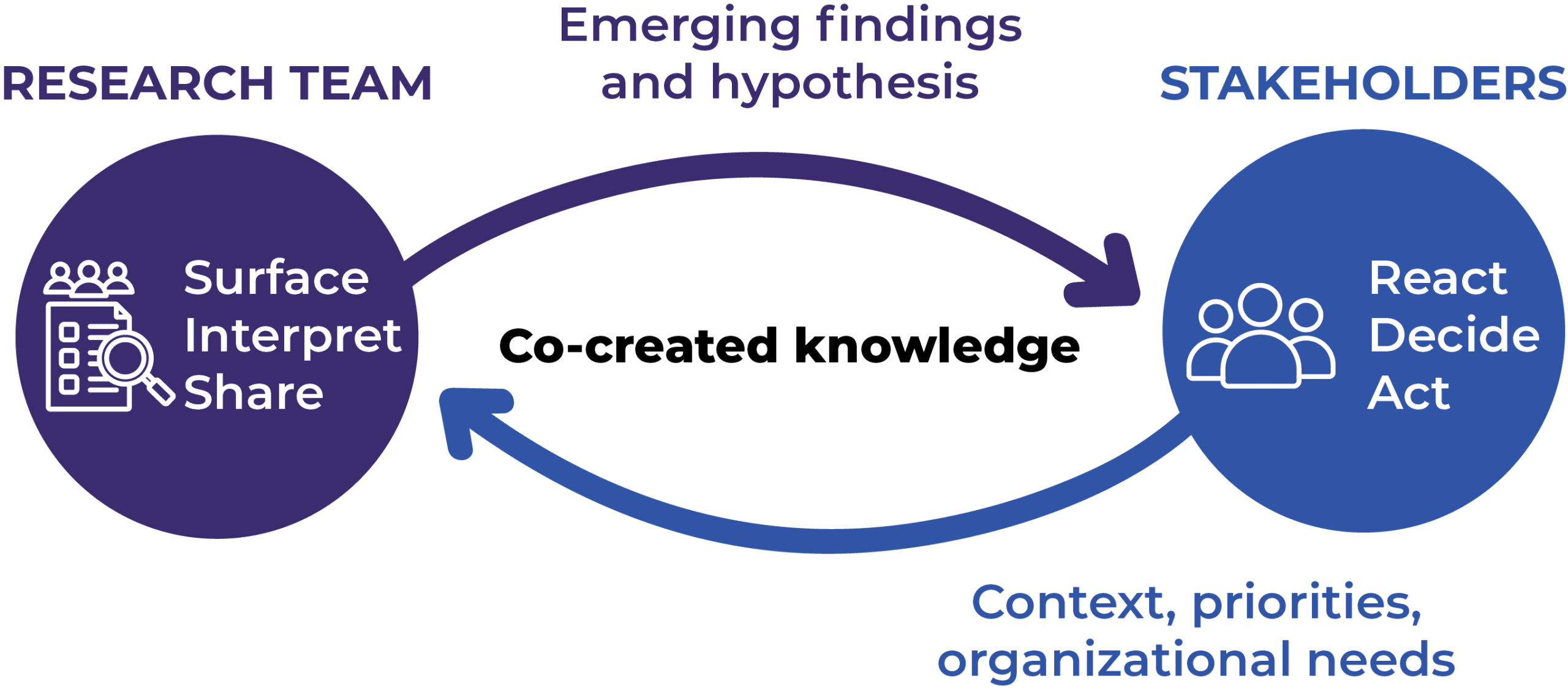
In practice, this means our most important conversations with clients don’t happen at the readout. They happen throughout the project: at kickoff, during fieldwork check-ins, in the informal exchanges that other teams might treat as simply procedural. Each of those interactions is an opportunity to test emerging findings, surface organizational context, and align on what will actually matter when the final report arrives.
By the time the team delivers findings, insights have already been stress-tested against the realities clients live in. The result is research that resonates, not because we’ve softened it, but because we’ve ensured it focuses where it can create change.
Why communication matters more than ever
The skills at the heart of this model (reading the room, surfacing context that is never written down, building shared understanding across a project) are distinctly human capabilities.
Despite the velocity of change, we are still in the early days of AI. We are working with genuine interest and excitement to understand the efficiencies and scale that these new tools can bring to our projects and our clients. But we are also discovering the inherent limitations of technologies that, by their very nature, lack lived experience. A large language model cannot reliably build the kind of trust that makes a stakeholder share what they’re really worried about. It cannot sense that a finding, however accurate, will be ignored, given a decision that was made last week. It cannot earn the credibility that makes a recommendation feel like a partnership rather than a prescription.
Increasingly, these are the skills researchers must bring to every engagement: not just the rigor of process and method, but the real listening and human judgment that fuel its ability to create change.